How to Attract More Customers to Your Business This Summer
Discover 7 practical summer marketing ideas to help attract more customers, increase foot traffic, and grow your local business without a large advertising budget.

Nancy J. Hassler
Austin summers are brutal for foot traffic. Heat pushes people indoors, out-of-town visitors move on a different schedule than regulars, and by August a lot of storefronts still look and sound exactly like they did back in March. Here's how to attract more customers to your business this season: seven summer marketing ideas for small business owners, each cheap or free and built around what's actually happening in Austin right now instead of a generic playbook that could run any month of the year. Start with whichever takes the least time this week.
Update Your Google Business Profile for Summer
Most Google Business Profiles get set up once and never touched again, which means one of the simplest ways to promote local business sits there doing nothing. Tolerable in a slow season. It falls apart in summer, when hours change for holidays, patios open, and whatever's in stock shifts by the week while the listing itself keeps saying whatever it said in March.
Hours are the first fix: a listing still marked "closed" on a day you're actually open loses the click before a customer ever picks up the phone. Attributes come next. Flag anything seasonal, outdoor seating or curbside pickup, and don't skip air conditioning in your description. In a city that regularly clears 100 degrees, that single detail can be the whole reason someone picks you over the identical-looking place next door. Post weekly if you can manage it. BrightLocal's 2026 research tied two to three posts a week to meaningfully higher engagement than monthly posting, and a profile quiet for 30 days starts losing visibility for reasons that have nothing to do with the business behind it. Ten minutes total, and it's the fastest way to promote your business locally before an ad budget enters the picture at all.
Run a Summer Promotion or Limited-Time Offer
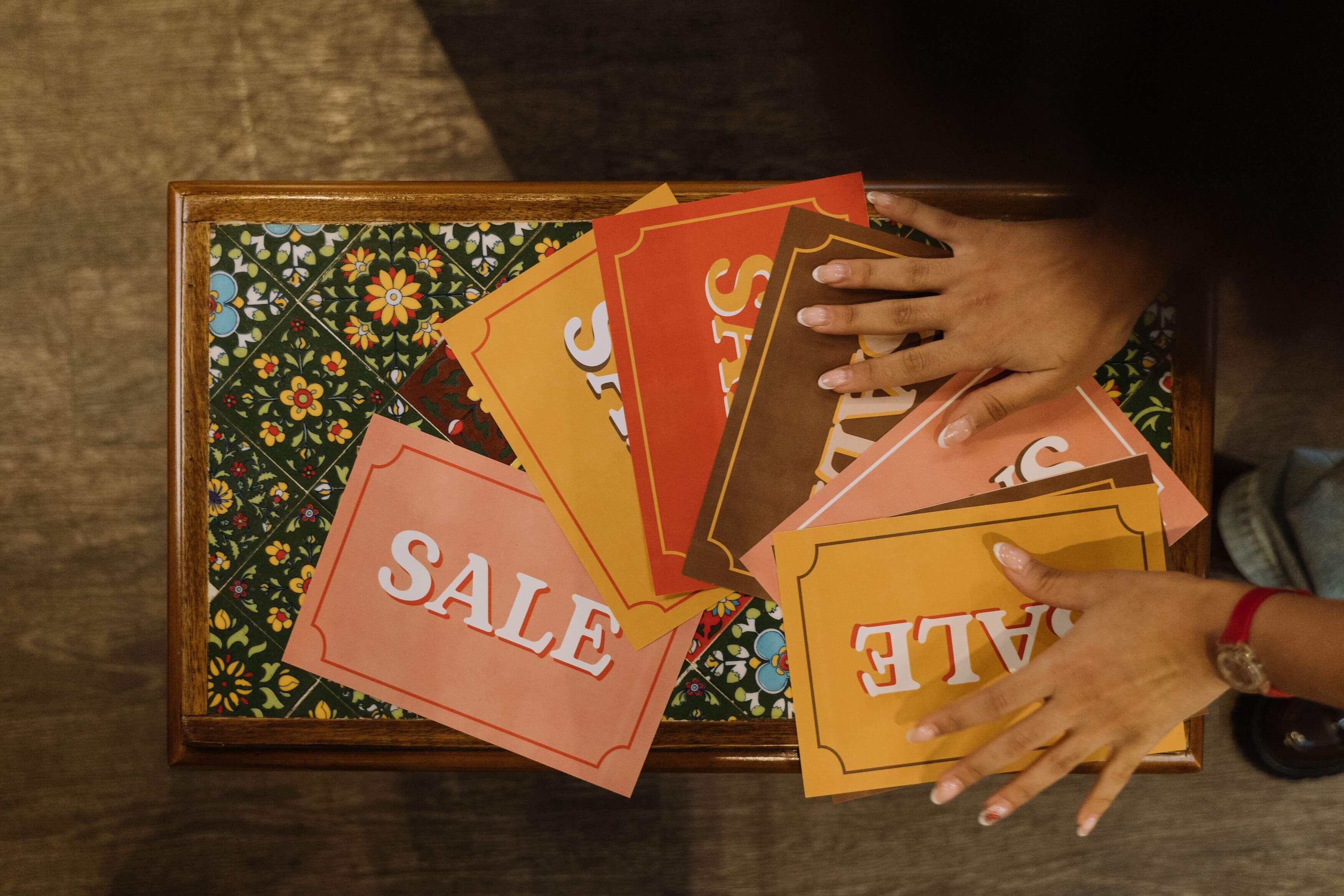
Picture two sandwich boards outside two different shops. One says "Summer Sale, 20% Off." The other says "This Weekend Only: Beat the Heat, 20% Off Iced Drinks." The second one sells more, because it has an edge the first one doesn't: a deadline and a reason tied to right now.
Small business summer promotions work on scarcity, not just discount size. Pick one constraint and build around it: a four-day heat wave becomes an "AC relief" discount on indoor services, the week before a local festival becomes a bundle aimed at people passing through. Put an end date on it, publish that offer everywhere a customer already looks (a GBP Post, the countertop, an email if you have a list), and hold the line when it "hasn't performed yet" by day two, since extending a deadline once teaches customers your deadlines never really meant anything. More angles beyond timing live in small business marketing ideas 2026.
Use User-Generated Content to Build Trust
Five stars on a review carry some weight. Far more persuasive is an unprompted photo a customer posts of your patio to their own followers, since it reaches people who trust that customer more than they'll ever trust an ad. Between a business making a claim and a customer showing proof of it sits most of what user-generated content is worth.
Getting a steady stream of it takes a specific task at a specific moment, not a hope that happy customers think of it themselves. Try a table card requesting a tag, a quick word from staff at checkout, or a QR code taped by the register. Some businesses build in a small reward for sharing, the same logic as loyalty points but pointed at content instead of purchases, and Loca's rewards program runs on exactly that: customers earn for posting about a visit, not only for making one. Keep one thing in mind, though: this only builds trust if it looks like it came from someone's actual day out, not a staged shoot. Imperfect beats polished, nearly every time.

Reward Repeat Customers With a Loyalty Program
New customers are expensive to find and easy to lose. The more durable answer to how to attract more customers to your business isn't a bigger acquisition budget, it's giving the customers you already have a reason to keep choosing you over whatever's next door.
Building a customer loyalty program for a small business doesn't take much engineering: punch card, points app, a simple tracker all work, and the mechanism matters less than whether people actually understand it and see a payoff fast. Twenty visits before the first reward is too many; most customers won't stick around that long to find out if it was worth it.
Loca handles this part automatically, with customers earning rewards just for visiting and for sharing content about you, no punch cards to lose, no setup cost on your end. Grow your local business with Loca and stop being the one who has to remember who's owed what.
Get Listed on Local Discovery Apps
Someone standing outside a shop they've never visited, phone already open to Apple Maps because that's what their phone defaults to, doesn't switch over to Google out of loyalty. If the listing that pops up hasn't been touched since the business opened, wrong hours, no photos, that visitor moves on to whichever competitor's listing looks alive. Apple Maps and Nextdoor run on entirely separate systems from Google, so claiming a Google Business Profile does nothing for either one; each has to be claimed and kept current on its own. That upkeep pays off twice over on an app built around local rewards. Loca gives a customer a reason to pick the unfamiliar shop over the chain they already know, a small incentive that does the most good for a business that's new in town or still working to be someone's regular stop instead of their backup.
Partner With Other Local Businesses
 A shaved-ice stand and the pool-supply shop three doors down aren't selling anything similar, but they're both selling to the same person trying to survive July, and that overlap is exactly what turns two unrelated businesses into partners worth having.
Skip the contract entirely. Let a receipt from one business earn a small perk at the other, nothing to set up, nothing to maintain. The same logic covers a window sign for the neighbor's summer sale, or just a stack of their postcards by the register. Most of these arrangements start the unglamorous way, two owners running into each other at a local business networking meetup and realizing their customers overlap more than their inventory ever will. When you do reach out cold, skip "we should collaborate sometime" and name the actual idea; vague invitations get filed away, and specific ones get a yes.
Make the Most of Summer Foot Traffic With In-Store Signage
Still taped in the window of plenty of shops is a sign from a Valentine's Day sale, telling every passerby in July that nobody's paying attention inside. Digital marketing gets the budget and the meetings, but the sidewalk is still doing plenty of work on anyone deciding how to get more foot traffic in the next ten minutes rather than the next month.
Naming something concrete, today's special, the exact discount, an event's start time, beats a board that just says "OPEN." Shade helps just as much: an awning or umbrella that gives someone a reason to stop moving in 100-degree heat wins over clever copy every time, and signage has to change with the calendar since nothing undercuts a business faster than a board still promoting March. Building all of this into a seasonal plan is worth an afternoon of anyone's time; this local business marketing plan walks through the process end to end, and the structure holds regardless of what you sell.
Closing
Seven moves, and not one of them needs a marketing degree or an ad budget behind it. Matching the season is most of how to attract more customers to your business this summer. Skip that, and every idea above just turns into more noise competing with everyone else's.
Pick whichever costs the least time this week (the Google Business Profile update usually wins that contest) and layer in the rest as summer goes on. When foot traffic slows heading into fall, the same thinking carries forward: the next natural moment to run it all back is Small Business Saturday, which rewards exactly the local-first shopping these local business marketing tips are built around. Want the loyalty and rewards side running itself instead of living on a sticky note behind the register? Grow your local business with Loca and let this summer's foot traffic turn into customers still showing up in October.