Small Business Networking Events and Groups
Small business networking events and groups in the US and Austin help owners find new clients, trusted partners, and practical ideas — while turning connections into measurable results through clear KPIs, marketing strategy, and sustainable growth.

Julia

Small business networking is one of the fastest, lowest‑cost ways to get customers, partners, and honest feedback on your business ideas. In the US generally and in Austin in particular, there is a mature ecosystem of small business networking events and small business networking groups designed specifically for founders and local entrepreneurs.
What Small Business Networking Really Is
Small business networking means intentionally building relationships with other owners, professionals, and potential partners through structured meetings, conferences, and ongoing groups. Unlike random socializing, networking for small business focuses on exchanging value: referrals, collaborations, mentoring and knowledge that move your KPIs in the right direction.
For small businesses, networking fills the gaps that limited budgets leave in marketing and sales. Strong connections help you stress‑test new offers, get warm introductions instead of cold outreach, and turn key opinion leaders in your niche into amplifiers of your brand.
Major Small Business Networking Groups in the US
Across the US, entrepreneurs can tap into national and local small business networking groups that meet weekly or monthly. These communities often have a structured agenda, dedicated time for pitching your business, and clear expectations around referrals and attendance.
Some of the most impactful groups include:
- Chambers of Commerce: Local chambers organize business networking events, advocacy, and education for member businesses in almost every city and region.
- SCORE and SBDC: These SBA‑supported mentoring and training networks mix education with networking for small business owners through workshops, local meetups, and 1:1 mentoring.
- Online communities and platforms: National entrepreneur communities, LinkedIn groups, and curated peer groups give access to founders across the country when in‑person events are not possible.
BNI and Referral‑Driven Networking
BNI (Business Network International) is one of the best‑known names in business networking events worldwide, including the US. It operates thousands of local chapters, each built on a strict system: one person per profession per chapter, weekly meetings, and a heavy emphasis on tracked referrals.
For many small business owners, BNI works like an external sales force built from trusted peers who actively look for business for one another. The discipline around attendance, structured agendas, and measurable referrals aligns well with owners who think in terms of metrics and KPI rather than vague “visibility.”
National Small Business Networking Events and Conferences
Beyond ongoing groups, the US has a rich calendar of large‑scale small business networking events and conferences. These trade shows and summits combine education, exhibitions, speed networking, and workshops tailored to small business challenges.
Examples include:
- Small Business Expo: Marketed as America’s largest series of small business conferences and business networking events, with free entry for attendees in multiple cities.
- Themed small business conferences: Annual events that cover marketing, technology, operations, and finance for small firms, often recommended as “must‑attend” by small business advisors.
- Local and regional expos: City‑level events that attract hundreds or thousands of entrepreneurs, with vendor booths, expert panels, and structured networking sessions.

SBA and Local Resources for Finding Events
The U.S. Small Business Administration (SBA) plays a central role in connecting owners with educational and networking opportunities. Through its event calendar and partner network (SCORE, SBDCs, Women’s Business Centers), SBA lists webinars, workshops, and local business networking events across the country.
Owners also increasingly discover small business networking events through platforms like Meetup and Eventbrite, where you can filter by “small business networking” and location. Online communities such as entrepreneur forums and subreddits share tips on which events are worthwhile and how to approach networking strategically rather than randomly.
Small business networking in Austin, Texas
Austin stands out as a hotspot for entrepreneurs and startups, which makes its networking scene especially rich. Here, small business networking events range from large expos and tech conferences to intimate coffee meetups and trade‑specific groups.
Notable examples include:
- Austin Small Business Expo: A major local installment of the national expo series, bringing together 2,000+ entrepreneurs, workshops, and structured networking under one roof.
- SXSW‑related business tracks: While famous for music and film, SXSW’s entrepreneurship and startup content attracts founders, investors, and innovators from around the world.
- Ongoing Meetup and Eventbrite groups: Dozens of recurring networking events in Austin focus on sectors such as trades, creative services, tech, and professional services.
Local Groups and BNI Chapters in Austin
Austin entrepreneurs can plug into a mix of independent groups and local chapters of national networks. Meetup lists targeted groups like “Trades Together – Elite Networking for the Trades” and BNI‑branded meetups such as “Rise & Thrive: Connecting Business Owners at Live Oak BNI.”
BNI chapters in and around Austin follow the same referral‑driven playbook as elsewhere but benefit from the city’s fast‑growing economy and strong small business culture. In parallel, other networks and curated meetups give owners a chance to test different atmospheres: from formal breakfast meetings to relaxed evening mixers, before committing to a single format.
How to choose the right events and groups
Because there are so many options, effective small business networking starts with clear selection criteria. Treat business networking events like any other investment: define your goals, estimate potential return, and track key performance indicators over time.
Key criteria to compare:
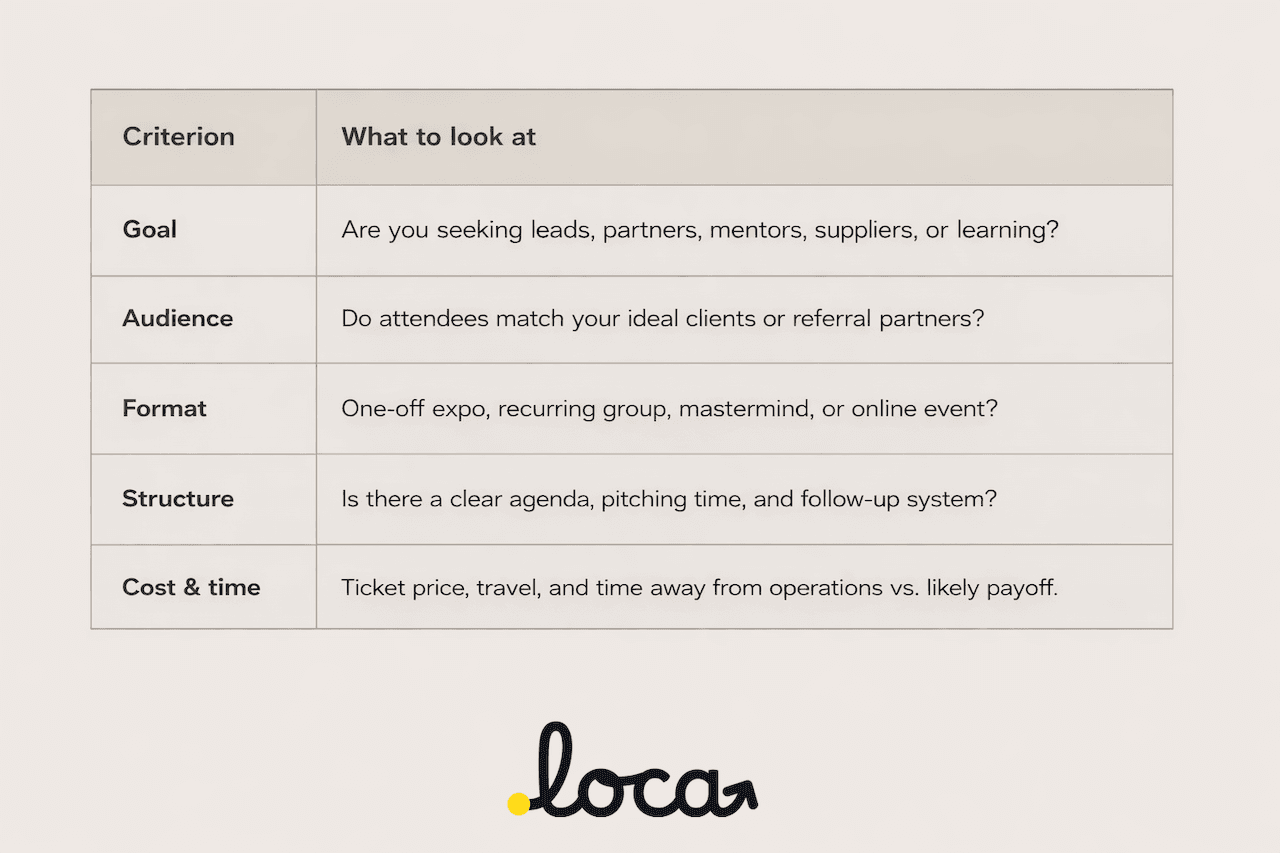
To avoid “busywork networking,” link each event to explicit metrics and KPIs: minimum number of quality conversations, booked follow‑up meetings, or new opportunities entering your pipeline. A concise guide on the difference between metrics and KPI can help you formalize these targets and review which events really drive growth.
Turning contacts into revenue
Collecting business cards is easy; turning them into sales is where most owners struggle. Consistent follow‑up and simple systems make the difference between a stack of forgotten cards and a growing client base.
Best practices include:
- Follow up within 24–48 hours with a short, personalized message reminding them who you are and suggesting one clear next step (call, coffee, intro).
- Track contacts in a CRM or simple spreadsheet with fields for event, interest level, next action, and potential value.
- Nurture relationships with content and collaboration: co‑hosting webinars, guest posts, or campaigns with industry key opinion leaders who already have your target audience’s trust. A deeper dive into working with key opinion leaders shows how to integrate this with your overall marketing plan.
Networking, Marketing Challenges, and New Business Ideas
For many owners, networking is part of the answer to classic small business marketing challenges such as low brand awareness, limited budget, and uncertainty about which channels work. By showing up consistently in small business networking groups, you not only meet prospects but also watch what other successful owners are doing in real time.
These environments often spark fresh small business ideas: from new service packages and partnerships to market pivots and niche positioning. If you are exploring or refining your concept, curated lists of small business ideas can give you a starting point, while conversations at networking events validate which ideas resonate with real people. At the same time, resources on tackling small business marketing challenges help you avoid common pitfalls when you start promoting those ideas.

Why you Should Connect Your Networking to Loca
Networking delivers its highest return when it is tightly connected to your marketing and measurement stack. Each new contact from small business networking events should flow into campaigns, experiments and clear KPIs, not just into your phone’s contact list.
Loca is built for small business owners who want an affordable, smart way to turn relationships into results. With a business account on Loca, you can:
Organize and segment contacts from events, then run targeted campaigns and see how they move your KPI. Test and scale new offers that came from networking conversations, without wasting budget on broad, unfocused marketing.
Tackle everyday small business marketing challenges with tools designed for owners, not full‑time marketers. Create your business account on Loca today to connect the dots between small business networking, smart marketing, and measurable growth. So every event, group, and conversation has a clear path to becoming revenue.